
Whether it’s your first visit to “One Happy Island” or you’re a returning Aruba enthusiast, these practical travel tips for 2026 will help you get the most from your trip – from entry requirements to local insider knowledge.
Before You Go – The ED Card Is Non-Negotiable
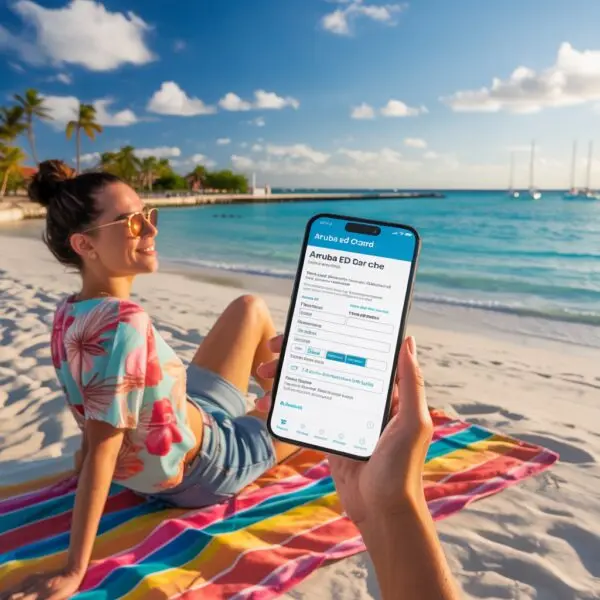
The single most important pre-travel task is completing the Aruba ED Card. This mandatory online form at edcardaruba.aw must be submitted within 7 days of arrival. Airlines will not allow boarding without it. Set a reminder 3-5 days before your flight. All the details are in our ED Card guide.
Don’t forget the $20 USD Sustainability Fee for air travelers aged 8+ – this is paid during the ED Card application. See our fee breakdown.
Money Tips for Aruba
- USD is widely accepted – no need to exchange for AWG (Aruban florin) for most transactions
- Credit cards widely accepted in hotels, restaurants, and shops
- ATMs dispense AWG and sometimes USD
- Aruba is not cheap – budget $150-400 per person per day all-in for a comfortable stay
- Duty-free shopping at Queen Beatrix Airport before departure
- Bargain at local markets but not at fixed-price shops
Best Way to Get Around
- Rental car: Best for exploring the island independently – roads are generally good
- Arubus: Public buses serve Palm Beach/Eagle Beach corridor cheaply
- Taxis: Widely available, metered, safe – more expensive for longer distances
- Scooter/motorcycle: Popular for exploring – wear helmets and drive carefully
- Driving is on the right side of the road; international driver’s licenses accepted
Beach Tips
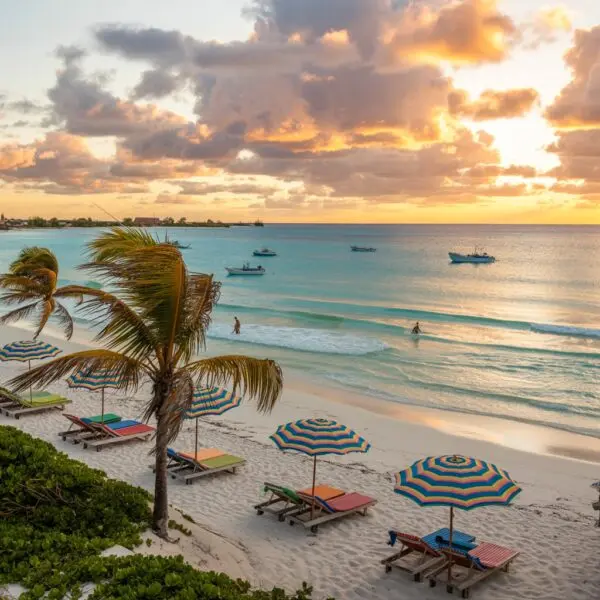
- Book beach chairs in advance at popular resorts during peak season
- Eagle Beach has some public chairs but resort guests get priority
- Bring your own snorkel gear or rent from water sports vendors
- The trade winds are constant – bring a cover-up or light jacket for evening
- Eastern coast beaches (Boca Grandi, Dos Playa) have dramatic surf but swimming is dangerous
Best Things to Do Beyond the Beach
- Rent a 4WD for the Natural Pool tour – one of Aruba’s bucket-list experiences
- Visit Arikok National Park – free entry, stunning landscapes
- Take the sunset cruise from Palm Beach pier
- Visit Hooiberg Hill – 337 steps to panoramic island views
- Explore Oranjestad’s colorful Dutch colonial architecture
Cultural Tips
- Greet people with a friendly “Bon dia” (good morning) or “Bon tardi” (good afternoon) in Papiamento
- Arubans are among the most welcoming people in the Caribbean
- Tipping 15-20% is expected at restaurants; some add a service charge automatically
- Beach attire should stay on the beach – cover up in town
- Carnival in February is spectacular – book accommodations well in advance
Safety
Aruba is one of the safest Caribbean islands with low crime rates. Standard precautions:
- Don’t leave valuables on the beach unattended
- Use hotel safe for passports and valuables
- Standard water precautions – tap water in Aruba is safe to drink (some of the best in the Caribbean)
- Sunscreen reapplication is critical – the sun is powerful year-round
For complete planning including entry requirements, check our full Aruba travel guide and beaches guide.
Frequently Asked Questions
What is the most important thing to do before flying to Aruba?
Complete the mandatory Aruba ED Card at edcardaruba.aw within 7 days of arrival. Airlines will not allow boarding without it.
Is tap water safe to drink in Aruba?
Yes – Aruba’s tap water is safe and considered among the best-quality tap water in the Caribbean.
Do you need USD in Aruba?
US dollars are widely accepted across Aruba. The local Aruban florin (AWG) is the official currency but USD is equally practical.
Is Aruba expensive for tourists?
Aruba is one of the pricier Caribbean destinations, especially during peak season. Budget $150-400 per person per day for a comfortable trip.